


THE BEETROOT
When we talk about health, we talk about red beets. And that is why we are going to dedicate this space to talk about this root and its very interesting properties when taken raw. The leaves of this plant can also be consumed, but it is the root that contains most of its properties.
It is an anticancer food:
This attributed power comes from its great richness in flavonoids, mainly betaine, the red pigment so characteristic of beets.
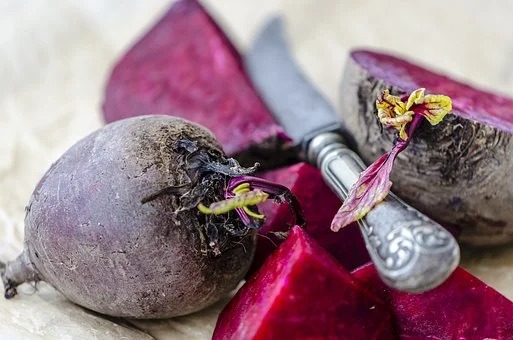
There are studies that say that its consumption inhibits and prevents the appearance of tumours. It is a very beneficial food for our body and a powerful antioxidant. Having a diet rich and abundant in fruits and vegetables is shown to be favourable to disease and in the delay or appearance of tumours.
Antioxidants are responsible for eliminating free radicals from the body, neutralizing them and thus preventing them from damaging organs, such as kidneys, liver, heart ... Nothing works miracles, but let's be aware of the daily use of nutrition to prevent illness, and always be cautious with this type of statements, in the face of serious diseases. There are many factors that intervene in the states of your health and we must question as taking beets is not enough in itself to cure any disease.
- As a source of IRON:
For every 100 grams of beets, we find 0.8 mg. of iron. In addition to being a great source of vitamin C, which increases the absorption of iron, and although there are other foods with more iron, its richness in folic acid makes it the quintessential food to treat these deficits.
This makes beets the perfect ally in cases of anaemia, thanks to its large number of folates (folic acid), vitamin B9, which is a vitamin that is only found in vegetables and that is essential when it comes to producing red blood cells.
As a tip, when it comes to synthesizing iron better, it is advisable to mix this food with another that contains vitamin C in order to increase the bioavailability of iron (for example, by adding a few drops of lemon juice to beets)
On the contrary, and although it sounds contradictory, it is not recommended to consume it together with other foods rich in iron in cases of anaemia, since they would "steal" minerals from each other and have the opposite effect, it is advisable to consume it together with foods rich in calcium to avoid these unwanted effects.
Its consumption is also interesting in women with heavy menstruations, during pregnancy or those who are recently given birth, where the contribution of iron is even more necessary.
- Anti-aging:
Thanks to its high content of antioxidants, folic acid, and vitamin B9, a great mix to keep the good health of the skin, hair and nails, with rejuvenating effects.
- A healthy and young heart:
Once again, folic acid is in charge of nourishing our heart thanks to the beet and its antioxidant effects.
Heart-healthy food, rich in fiber, antioxidants, potassium, B vitamins (except B12). It benefits us when it comes to lowering cholesterol, reduces hypertension and cleanses our arteries, reducing the possibility of cardiovascular accidents such as heart attacks or strokes.
- Keeping constipation at bay:
The large amount of fiber in beets makes it very useful when emptying the intestine in the face of constipation problems and in its prevention.
The beet is very digestive and also has a prebiotic effect, which helps to improve the intestinal flora. So, we are looking at a highly digestive food recommended even in cases of intestinal disease such as irritable bowel, ulcerative colitis or Crohn's disease.
- For the proper functioning of the LIVER:
As we have indicated, its richness in antioxidants is just what our liver needs to detoxify, cleanse and stay healthy. Thanks to its purifying effects, beetroot is essential in diets for patients with fatty liver, cirrhosis or hepatitis. We are not surprised to find our urine stained red or pinkish after consumption, don't worry! it is normal, it´s due to its powerful pigmentation.
- To lose weight? Well for that too!! ...
Beets provide us with very few calories, approximately 43 kcal per 100 grams.
These calories come mainly from carbohydrates, but since it is a food rich in fiber, these are absorbed slowly.
And let's not worry about sugar, since as we have already indicated above, the variety used for the sugar industry is white beet, and not red, which is what we are dealing with. The sugar content of a red beet is similar to that of half an apple, to give you an idea.
- As an extra energy:
Rich in carbohydrates, it’s a great energy food, with easily assimilable calories, so as we also pointed out previously, a great ally in weight loss diets.
- Athletes, this interests you:
Studies have shown that there are a lot of benefits when consuming beets in the performance of elite athletes.
Hence, many of them take advantage of the health properties offered by beets to increase their physical performance in endurance sports.
The key to increasing in resistance, offered by beets to athletes, would be in nitric oxide, an important vasodilator capable of increasing blood flow at the muscular level and thus favouring oxygen in the muscles.